So for the last 8 years I have been a full time something; part time designer. Student, Husband, Father, Intern, Manager, Associate, Agent, Representative. I have now made the scariest decision of my life: full time designer, part time everything else. It's a weird transition and not one without a bit a remorse, trepidation, and reservation. I have an amazing opportunity at Backcountry.com to work on new user interface initiatives in their newly minted product design group. We going to be developing products (in this case websites) that are unlike anything before seen in the outdoor retail category. Everything is based on business strategies and customer input; our job is to marry the two in a cohesive, comprehensive solution. We're like the bastard love child bridge between marketing, customers, and design. It's going to be a wild ride.
p.s. If ANYONE! has good ideas on sites they like, functionalities that catch their eye, engaging designs, or sites that flow seemlessly, hit me up at cody [at] calbrechtdesign [dot] com. (Sorry for the goofy link, but it helps keep spammers at bay) Conversely, if you see anything on Backcountry, Dogfunk, SteepandCheap, WhiskeyMilitia, Chainlove, or Tramdock that gets on your nerves, be sure to let me know.
Cheers, and thanks for reading.
Monday, October 27, 2008

on: Consumerism

Yeah, so I finally succumbed and bought an iPhone. It is the single greatest device (or compilation of devices) known to man. It moves between programs effortlessly. I can easily take a new contact from a chat window, make it a new contact, easily change information in a non linear fashion, save that contact, call the person, check my visual voicemail while on the phone, take a picture and email it to them, while still on the phone, and then browse for restaurants for dinner that. This thing is insane! As Mr. Eames
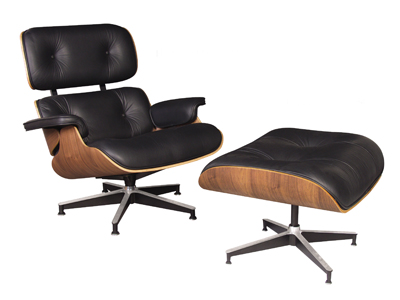 was so fond of saying, "Details are what make the design." The iPhone works because designers paid attention to the details. They took to the time to solve and resolve many of the problems inherent in phone design. The didn't simply gloss over a problem because it was a "too difficult, too expensive, unnecessary, unnoticed, out of the ordinary, nobody else does it that way," matter. They took the time to solve the problems. Design is not about decoration. Design is fundamentally about arranging disparate elements into a cohesive, coherent whole. I don't care if it's graphics, architecture, road signs, surgical instruments, or soda pop packaging; design is about taking the chaos and making that chaos communicate. My iphone takes the chaotic variety of tasks that I need to perform in a day, and communicates to me how to perform those tasks in a way that is intuitive and succinct. I love the iPhone.
Wednesday, October 8, 2008
on: Product Placement
Grant McCracken (Cultureby.com) is one of the most in-touch writers at the intersection of commerce and consumer culture. A classically trained anthropologist, he really gets what's important about how people interact, and how those interactions should drive marketing and product decicions. And he's funny.
Talking about a new experiential marketing strategy:
"The art of this deal was to evoke the brand without damaging the story telling."
How often do we get so caught up in the "messaging", that we compromise the message? Think back to the last car commercial you saw. It probably went something like this: The all new 304hp, flat six Boxer engine, symmetrical all wheel drive, servo controlled, adjustable limited slip differential, four door, four wheel, forty cupholder, with a gas AND brake pedal, Subaru Impreza WRX STI evo IX specV R-Type, now with XM radio, an iPod jack, a 40GB hard drive, indepedent front and rear WiFi hotspots, a coffee maker, two german fashion models and a years subscription to Car and Driver. Visit your Subaru for more details... Don't even get me started on the fine print, 900wpm voice at the end of these commercials. All features and no benefit.
My dad always had this to say, "If you have to tell me, it's because you can't show me." If you have to tell me how good your car is, it's because you can't show me. The key to preserving the story, to maintaining the integrity of the message, while selling the brand, is to create products deserving of their own stories. Show me the Subaru ripping through a country road and taking turns and speeds that would snap the neck of lesser mortals. Put the "Professional Driver, Closed Course" in really big letters at the beginning of the commercial. Then film speeds that you get you thrown off of the Isle of Mann. People love Jezzer, Hamster and Captain Slow because they dispense with the features and get on with the benefits. "The Alfa 8c is not a car, it's a piece of art. Each one should come with four dots of blue tack, so that you can mount in on the wall" or "This car is rubbish on the track, but you're not buying it for that. You're buying it to park outside of a Monte Carlo casino, in which case it performs spectacularly."
Not only is the production value extremely high, but the content is engagingly HONEST! They put things in context, good, bad, ugly, or indifferent. It's refreshing to hear someone tell a real story, about a real product, deserving of it's own story. Oh, and if your product isn't worth talking about, save the money you would have spent on ads, and go build the revB that you should have built from the beginning.
Talking about a new experiential marketing strategy:
"The art of this deal was to evoke the brand without damaging the story telling."
How often do we get so caught up in the "messaging", that we compromise the message? Think back to the last car commercial you saw. It probably went something like this: The all new 304hp, flat six Boxer engine, symmetrical all wheel drive, servo controlled, adjustable limited slip differential, four door, four wheel, forty cupholder, with a gas AND brake pedal, Subaru Impreza WRX STI evo IX specV R-Type, now with XM radio, an iPod jack, a 40GB hard drive, indepedent front and rear WiFi hotspots, a coffee maker, two german fashion models and a years subscription to Car and Driver. Visit your Subaru for more details... Don't even get me started on the fine print, 900wpm voice at the end of these commercials. All features and no benefit.
My dad always had this to say, "If you have to tell me, it's because you can't show me." If you have to tell me how good your car is, it's because you can't show me. The key to preserving the story, to maintaining the integrity of the message, while selling the brand, is to create products deserving of their own stories. Show me the Subaru ripping through a country road and taking turns and speeds that would snap the neck of lesser mortals. Put the "Professional Driver, Closed Course" in really big letters at the beginning of the commercial. Then film speeds that you get you thrown off of the Isle of Mann. People love Jezzer, Hamster and Captain Slow because they dispense with the features and get on with the benefits. "The Alfa 8c is not a car, it's a piece of art. Each one should come with four dots of blue tack, so that you can mount in on the wall" or "This car is rubbish on the track, but you're not buying it for that. You're buying it to park outside of a Monte Carlo casino, in which case it performs spectacularly."
Not only is the production value extremely high, but the content is engagingly HONEST! They put things in context, good, bad, ugly, or indifferent. It's refreshing to hear someone tell a real story, about a real product, deserving of it's own story. Oh, and if your product isn't worth talking about, save the money you would have spent on ads, and go build the revB that you should have built from the beginning.
on: Icons (pt.2)
The iphone has no logo on the front because the iphone has UI designers involved. The phone is really only seen when held to the head. The logo is on the back of the phone, perched neatly in the crux created between the thumb and index finger. Yeah, they're that good.
Monday, July 28, 2008
on: Icons
I love the new iPhone. A friend of mine just got one. It has a light saber in it that moves with the accelerometer. Are you kidding me? This may sound like a geeky toy, and it is, but what a toy! The iPhone is an icon, a veritible Renoir, or Monet, of product design. Icon is the perfect word, because an icon is something that is purely self referential. And here is why I love the iPhone so much: There is no logo on the front of the device.
The Instinct and the Dare are relying heavily on logo placement to distinguish their device. I'll 9 out of 10 people really couldn't tell you what each looked like. My mom just bought a Dare recently. She couldn't tell me what it was, only that it had a touch screen, "you know, like the iPhone."
If we spend more time on product design: really nailing our inputs, working out the bugs in the preproduction phase, and building iconic products, we wouldn't have to spend so much money on promotion. I realize that not every product is going to be a category changer, but the hell don't we try harder to create them. I mean really, would you rather have the ROKR or the RAZR project on your resume. Most of us aren't in the c suite where the real decisions get made. Try and make a difference where you are, with have what you have, the best you can. or, if you're at a company where management doesn't want to change the game, find one that is (they are out there). Or start it. They is less and less room in the world for the middle class. Like no other time in history. Read Tom Friedman's Lexus & the Olive Tree it you don't believe me, written 10 years ago, and many of his globalization predictions have come to pass with startiling accuracy.
Brands require more than clever icons to survive; they require iconic products. (ref: pets.com)
The Instinct and the Dare are relying heavily on logo placement to distinguish their device. I'll 9 out of 10 people really couldn't tell you what each looked like. My mom just bought a Dare recently. She couldn't tell me what it was, only that it had a touch screen, "you know, like the iPhone."
If we spend more time on product design: really nailing our inputs, working out the bugs in the preproduction phase, and building iconic products, we wouldn't have to spend so much money on promotion. I realize that not every product is going to be a category changer, but the hell don't we try harder to create them. I mean really, would you rather have the ROKR or the RAZR project on your resume. Most of us aren't in the c suite where the real decisions get made. Try and make a difference where you are, with have what you have, the best you can. or, if you're at a company where management doesn't want to change the game, find one that is (they are out there). Or start it. They is less and less room in the world for the middle class. Like no other time in history. Read Tom Friedman's Lexus & the Olive Tree it you don't believe me, written 10 years ago, and many of his globalization predictions have come to pass with startiling accuracy.
Brands require more than clever icons to survive; they require iconic products. (ref: pets.com)
Thursday, June 5, 2008
on: Crafting Brands

I received a Briggs and Riley Carryon Garment Bag as a gift for my birthday last month. First things first, this bag is clever. I have a garment bag that I almost never use because I can't carry it on. For most trips, it's too big, and one the trips where I want to check a bag, I usually take something the size of a duffle. This garment bag folds up into a carryon size, and unlike many compromise products, this one actually pulls it off.
But something else about the bag "fell into my lap" when I was putting it into the closet at my hotel. The guarantee card. The first thing that struck my eye was the brilliantly executed design of the card, bright orange highlighted with blue and gray. And then the real kicker, check this out:
"If your Briggs & Riley bag is ever broken or damaged, even if it was caused by an airline, we will repair it free of charge. Simple as that!"
That is what branding is all about. Do the right thing, do it the first time, and over deliver. You want customers to want your product, give them something worth wanting. Give them an experience worth experiencing. No manufactured BS. No "viral" marketing, just good 'ol Main Street common sense. Take care of your customer and they will take care of you. That's the best branding I know.
Thursday, April 3, 2008
Subscribe to:
Posts (Atom)

