This kid makes me feel really lazy. This is amazing.
Tuesday, November 11, 2008

on: Statesmanship
There used to be a principle known as "statesmanship." Foreign dignitaries, when visiting other regimes, friendly to the US or not, played nice. They acted with class, observed local customs, and regardless of their personal feelings for each other, engendered a climate of good will that often helped build compromise and mutual respect. Those days are gone. If you need proof, just ask Rocky Anderson. When President Bush visited Salt Lake City last year to speak at a VFW convention, Rocky Anderson, while Mayor of Salt Lake City, conducted a protest of President Bush, the war in Iraq, and the veterans attending the convention. Statesmanship would have precluded him from doing so. It is not inappropriate to disagree with government, to protest it's decision, but not when you are a figure entrusted with public service. This, however, is not a post about Rocky Anderson or President Bush. This is a post about statesmanship. This is a post about John McCain.

John McCain ran the worst campaign in United States history. He made Dan Quayle look focused and articulate. McCain could not define the message that so many republicans wanted to hear: personal accountability. But this is not a post about marketing, this is a post about Statesmanship. John McCain lost the election in a tidal wave of public backlash. As the French know, nothing unites a country like a common enemy, especially when that enemy happens to have been controversially elected for a second term. But McCain, raised in the generation of Statesmanship, remembered how he had been raised far too late in the game. After calling his opponent a socialist, a terrorist, a commie and a fraud, McCain realized something. His name calling had cost him the election. In focusing so much on his candidates message of change, and seeking to do change better, McCain lost himself the fight. In the cold dark of that election evening, that loss engendered a climate of goodwill once again. I imagine that McCain's mind was touched in his defeat, that he remembered what his mother taught him about others: "If you can't say anything nice..."
And so McCain reinstated Statesmanship that cold November night. He called on his supporters to release their death grip on the rhetoric and get behind their President elect. He continually silenced a booing crowd, and encouraged us to dig in together as citizens of a great nation, not as proponents of opposing ideology. He nobly commanded attention with his predictions that the problems facing us could not be solved with the thinking that created them. Partisan politics got us in to this mess, and only by crossing the aisle can we ever hope to move forward. It was one of the most humbling moments, to see the now penitent man, who had slung so much mud, to encourage the mud slinging to stop. He was the epitome of a Statesman that night, his class ever apparent in his tired face.
We need more men like John McCain. I'm not talking about crazy, left wing, pseudo moderate, pseudo neocon, public spending, tax cutting, supply side economics McCain. I'm referring to McCain at his best, when discussing foreign policy, and when giving concession speeches. We need men and women in government who are willing to be penitent, who are willing to show a little grace, a little humility, a little forbearance. We are facing the greatest economic crisis of the century.
We have been spending on credit with reckless abandon in both public and private life. As Jeremy Clarkson said, "The world has been playing musical chairs, and the music 's just stopped." We have been shifting around credit from fund to asset, asset to fund, bank to bank and hedge strategy to slush fund. Everyone has stuff, but nobody knows who owns it. In order to face this crisis I believe there are three fundamental truths we must face:
1. We have confused wants and needs, making yesterday's luxuries today's necessities.
2. We are running on borrowed time, borrowed energy, and borrowed money. If we don't cut back, we will run out of all three.
3. We believe that it is our government's job to provide for our every need. In the sixties we called this socialism. Today we call it "central planning." Wait, doesn't that term sounds vaguely familiar?
In the forties, when we went to war, the entire country cut back. We bought war bonds and conserved resources. We shared a national consciousness and a common enemy. Since Vietnam we have done nothing but fight with each other, bankrupting our government and leaving too many deserving causes out in the cold. Democrats demand more entitlement spending, because that's what gets them re-elected. Republicans demand more tax cuts and subsidies, because that's what gets them re-elected. As a country we are spending more, and contributing less than ever before. Corporations reduce taxable income to mere pennies of the earnings they report to shareholders. Individuals of every class take advantage of tax shelters, all the while asking for more. It's time we put down our weapons and extended our hands to each other. It's time for common sense in government, where we remember that our national balance sheet has the same principles as our personal balance sheets. Each one must be run with just enough debt to expand, but not so much that we're leveraged in a tight rope walk of borrow and spend. We need to cut social spending, raise taxes, and cut back our trade deficit and fraud. We need to shoulder the responsibility for our own actions and realize that if we want America to stay the greatest country on earth, we have be the most responsible generation in years.
(Good luck getting elected on that platform. When people won't stand up for common sense, well, good luck)

John McCain ran the worst campaign in United States history. He made Dan Quayle look focused and articulate. McCain could not define the message that so many republicans wanted to hear: personal accountability. But this is not a post about marketing, this is a post about Statesmanship. John McCain lost the election in a tidal wave of public backlash. As the French know, nothing unites a country like a common enemy, especially when that enemy happens to have been controversially elected for a second term. But McCain, raised in the generation of Statesmanship, remembered how he had been raised far too late in the game. After calling his opponent a socialist, a terrorist, a commie and a fraud, McCain realized something. His name calling had cost him the election. In focusing so much on his candidates message of change, and seeking to do change better, McCain lost himself the fight. In the cold dark of that election evening, that loss engendered a climate of goodwill once again. I imagine that McCain's mind was touched in his defeat, that he remembered what his mother taught him about others: "If you can't say anything nice..."
And so McCain reinstated Statesmanship that cold November night. He called on his supporters to release their death grip on the rhetoric and get behind their President elect. He continually silenced a booing crowd, and encouraged us to dig in together as citizens of a great nation, not as proponents of opposing ideology. He nobly commanded attention with his predictions that the problems facing us could not be solved with the thinking that created them. Partisan politics got us in to this mess, and only by crossing the aisle can we ever hope to move forward. It was one of the most humbling moments, to see the now penitent man, who had slung so much mud, to encourage the mud slinging to stop. He was the epitome of a Statesman that night, his class ever apparent in his tired face.
We need more men like John McCain. I'm not talking about crazy, left wing, pseudo moderate, pseudo neocon, public spending, tax cutting, supply side economics McCain. I'm referring to McCain at his best, when discussing foreign policy, and when giving concession speeches. We need men and women in government who are willing to be penitent, who are willing to show a little grace, a little humility, a little forbearance. We are facing the greatest economic crisis of the century.
We have been spending on credit with reckless abandon in both public and private life. As Jeremy Clarkson said, "The world has been playing musical chairs, and the music 's just stopped." We have been shifting around credit from fund to asset, asset to fund, bank to bank and hedge strategy to slush fund. Everyone has stuff, but nobody knows who owns it. In order to face this crisis I believe there are three fundamental truths we must face:
1. We have confused wants and needs, making yesterday's luxuries today's necessities.
2. We are running on borrowed time, borrowed energy, and borrowed money. If we don't cut back, we will run out of all three.
3. We believe that it is our government's job to provide for our every need. In the sixties we called this socialism. Today we call it "central planning." Wait, doesn't that term sounds vaguely familiar?
In the forties, when we went to war, the entire country cut back. We bought war bonds and conserved resources. We shared a national consciousness and a common enemy. Since Vietnam we have done nothing but fight with each other, bankrupting our government and leaving too many deserving causes out in the cold. Democrats demand more entitlement spending, because that's what gets them re-elected. Republicans demand more tax cuts and subsidies, because that's what gets them re-elected. As a country we are spending more, and contributing less than ever before. Corporations reduce taxable income to mere pennies of the earnings they report to shareholders. Individuals of every class take advantage of tax shelters, all the while asking for more. It's time we put down our weapons and extended our hands to each other. It's time for common sense in government, where we remember that our national balance sheet has the same principles as our personal balance sheets. Each one must be run with just enough debt to expand, but not so much that we're leveraged in a tight rope walk of borrow and spend. We need to cut social spending, raise taxes, and cut back our trade deficit and fraud. We need to shoulder the responsibility for our own actions and realize that if we want America to stay the greatest country on earth, we have be the most responsible generation in years.
(Good luck getting elected on that platform. When people won't stand up for common sense, well, good luck)
Thursday, October 30, 2008
on: Ayn Rand

Bar Stool Economics by David R. Kamerschen, Ph.D.
Suppose that every day, ten men go out for beer and the bill for all ten comes to $100. If they paid their bill the way we pay our taxes, it would go something like this:
The first four men (the poorest) would pay nothing.
The fifth would pay $1.
The sixth would pay $3.
The seventh would pay $7.
The eighth would pay $12.
The ninth would pay $18.
The tenth man (the richest) would pay $59.
So, that’s what they decided to do. The ten men drank in the bar every day and seemed quite happy with the arrangement, until one day, the owner threw them a curve. ‘Since you are all such good customers, he said, ‘I’m going to reduce the cost of your daily beer by $20. Drinks for the ten now cost just $80.
The group still wanted to pay their bill the way we pay our taxes so the first four men were unaffected. They would still drink for free. But what about the other six men - the paying customers? How could they divide the $20 windfall so that everyone would get his ‘fair share?’ They realized that $20 divided by six is $3.33. But if they subtracted that from everybody’s share, then the fifth man and the sixth man would each end up being paid to drink his beer. So, the bar owner suggested that it would be fair to reduce each man’s bill by roughly the same amount, and he proceeded to work out the amounts each should pay.
And so:
The fifth man, like the first four, now paid nothing (100% savings).
The sixth now paid $2 instead of $3 (33%savings).
The seventh now pay $5 instead of $7 (28%savings).
The eighth now paid $9 instead of $12 (25% savings).
The ninth now paid $14 instead of $18 (22% savings).
The tenth now paid $49 instead of $59 (16% savings).
Each of the six was better off than before. And the first four continued to drink for free. But once outside the restaurant, the men began to compare their savings.
‘I only got a dollar out of the $20,’declared the sixth man. He pointed to the tenth man,’ but he got $10!’
‘Yeah, that’s right,’ exclaimed the fifth man. ‘I only saved a dollar, too. It’s unfair that he got ten times more than I!’
‘That’s true!!’ shouted the seventh man. ‘Why should he get $10 back when I got only two? The wealthy get all the breaks!’
‘Wait a minute,’ yelled the first four men in unison. ‘We didn’t get anything at all. The system exploits the poor!’
The nine men surrounded the tenth and beat him up.
The next night the tenth man didn’t show up for drinks, so the nine sat down and had beers without him. But when it came time to pay the bill, they discovered something important. They didn’t have enough money between all of them for even half of the bill!
And that, boys and girls, journalists and college professors, is how our tax system works. The people who pay the highest taxes get the most benefit from a tax reduction. Tax them too much, attack them for being wealthy, and they just may not show up anymore. In fact, they might start drinking overseas where the atmosphere is somewhat friendlier.
For those who understand, no explanation is needed.
For those who do not understand, no explanation is possible.
Thank you Dr. | Thought the folks so excited about a Democratic government might enjoy this piece. Pay special attention to the last paragraph.
Monday, October 27, 2008
on: Transition
So for the last 8 years I have been a full time something; part time designer. Student, Husband, Father, Intern, Manager, Associate, Agent, Representative. I have now made the scariest decision of my life: full time designer, part time everything else. It's a weird transition and not one without a bit a remorse, trepidation, and reservation. I have an amazing opportunity at Backcountry.com to work on new user interface initiatives in their newly minted product design group. We going to be developing products (in this case websites) that are unlike anything before seen in the outdoor retail category. Everything is based on business strategies and customer input; our job is to marry the two in a cohesive, comprehensive solution. We're like the bastard love child bridge between marketing, customers, and design. It's going to be a wild ride.
p.s. If ANYONE! has good ideas on sites they like, functionalities that catch their eye, engaging designs, or sites that flow seemlessly, hit me up at cody [at] calbrechtdesign [dot] com. (Sorry for the goofy link, but it helps keep spammers at bay) Conversely, if you see anything on Backcountry, Dogfunk, SteepandCheap, WhiskeyMilitia, Chainlove, or Tramdock that gets on your nerves, be sure to let me know.
Cheers, and thanks for reading.
p.s. If ANYONE! has good ideas on sites they like, functionalities that catch their eye, engaging designs, or sites that flow seemlessly, hit me up at cody [at] calbrechtdesign [dot] com. (Sorry for the goofy link, but it helps keep spammers at bay) Conversely, if you see anything on Backcountry, Dogfunk, SteepandCheap, WhiskeyMilitia, Chainlove, or Tramdock that gets on your nerves, be sure to let me know.
Cheers, and thanks for reading.
on: Consumerism

Yeah, so I finally succumbed and bought an iPhone. It is the single greatest device (or compilation of devices) known to man. It moves between programs effortlessly. I can easily take a new contact from a chat window, make it a new contact, easily change information in a non linear fashion, save that contact, call the person, check my visual voicemail while on the phone, take a picture and email it to them, while still on the phone, and then browse for restaurants for dinner that. This thing is insane! As Mr. Eames
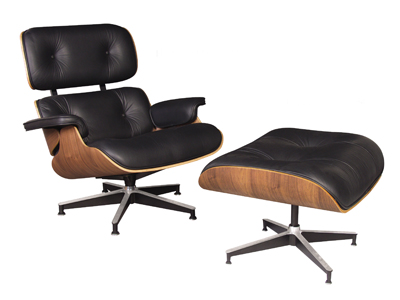 was so fond of saying, "Details are what make the design." The iPhone works because designers paid attention to the details. They took to the time to solve and resolve many of the problems inherent in phone design. The didn't simply gloss over a problem because it was a "too difficult, too expensive, unnecessary, unnoticed, out of the ordinary, nobody else does it that way," matter. They took the time to solve the problems. Design is not about decoration. Design is fundamentally about arranging disparate elements into a cohesive, coherent whole. I don't care if it's graphics, architecture, road signs, surgical instruments, or soda pop packaging; design is about taking the chaos and making that chaos communicate. My iphone takes the chaotic variety of tasks that I need to perform in a day, and communicates to me how to perform those tasks in a way that is intuitive and succinct. I love the iPhone.
Wednesday, October 8, 2008
on: Product Placement
Grant McCracken (Cultureby.com) is one of the most in-touch writers at the intersection of commerce and consumer culture. A classically trained anthropologist, he really gets what's important about how people interact, and how those interactions should drive marketing and product decicions. And he's funny.
Talking about a new experiential marketing strategy:
"The art of this deal was to evoke the brand without damaging the story telling."
How often do we get so caught up in the "messaging", that we compromise the message? Think back to the last car commercial you saw. It probably went something like this: The all new 304hp, flat six Boxer engine, symmetrical all wheel drive, servo controlled, adjustable limited slip differential, four door, four wheel, forty cupholder, with a gas AND brake pedal, Subaru Impreza WRX STI evo IX specV R-Type, now with XM radio, an iPod jack, a 40GB hard drive, indepedent front and rear WiFi hotspots, a coffee maker, two german fashion models and a years subscription to Car and Driver. Visit your Subaru for more details... Don't even get me started on the fine print, 900wpm voice at the end of these commercials. All features and no benefit.
My dad always had this to say, "If you have to tell me, it's because you can't show me." If you have to tell me how good your car is, it's because you can't show me. The key to preserving the story, to maintaining the integrity of the message, while selling the brand, is to create products deserving of their own stories. Show me the Subaru ripping through a country road and taking turns and speeds that would snap the neck of lesser mortals. Put the "Professional Driver, Closed Course" in really big letters at the beginning of the commercial. Then film speeds that you get you thrown off of the Isle of Mann. People love Jezzer, Hamster and Captain Slow because they dispense with the features and get on with the benefits. "The Alfa 8c is not a car, it's a piece of art. Each one should come with four dots of blue tack, so that you can mount in on the wall" or "This car is rubbish on the track, but you're not buying it for that. You're buying it to park outside of a Monte Carlo casino, in which case it performs spectacularly."
Not only is the production value extremely high, but the content is engagingly HONEST! They put things in context, good, bad, ugly, or indifferent. It's refreshing to hear someone tell a real story, about a real product, deserving of it's own story. Oh, and if your product isn't worth talking about, save the money you would have spent on ads, and go build the revB that you should have built from the beginning.
Talking about a new experiential marketing strategy:
"The art of this deal was to evoke the brand without damaging the story telling."
How often do we get so caught up in the "messaging", that we compromise the message? Think back to the last car commercial you saw. It probably went something like this: The all new 304hp, flat six Boxer engine, symmetrical all wheel drive, servo controlled, adjustable limited slip differential, four door, four wheel, forty cupholder, with a gas AND brake pedal, Subaru Impreza WRX STI evo IX specV R-Type, now with XM radio, an iPod jack, a 40GB hard drive, indepedent front and rear WiFi hotspots, a coffee maker, two german fashion models and a years subscription to Car and Driver. Visit your Subaru for more details... Don't even get me started on the fine print, 900wpm voice at the end of these commercials. All features and no benefit.
My dad always had this to say, "If you have to tell me, it's because you can't show me." If you have to tell me how good your car is, it's because you can't show me. The key to preserving the story, to maintaining the integrity of the message, while selling the brand, is to create products deserving of their own stories. Show me the Subaru ripping through a country road and taking turns and speeds that would snap the neck of lesser mortals. Put the "Professional Driver, Closed Course" in really big letters at the beginning of the commercial. Then film speeds that you get you thrown off of the Isle of Mann. People love Jezzer, Hamster and Captain Slow because they dispense with the features and get on with the benefits. "The Alfa 8c is not a car, it's a piece of art. Each one should come with four dots of blue tack, so that you can mount in on the wall" or "This car is rubbish on the track, but you're not buying it for that. You're buying it to park outside of a Monte Carlo casino, in which case it performs spectacularly."
Not only is the production value extremely high, but the content is engagingly HONEST! They put things in context, good, bad, ugly, or indifferent. It's refreshing to hear someone tell a real story, about a real product, deserving of it's own story. Oh, and if your product isn't worth talking about, save the money you would have spent on ads, and go build the revB that you should have built from the beginning.
on: Icons (pt.2)
The iphone has no logo on the front because the iphone has UI designers involved. The phone is really only seen when held to the head. The logo is on the back of the phone, perched neatly in the crux created between the thumb and index finger. Yeah, they're that good.
Subscribe to:
Posts (Atom)

